One Month After the Earthquake: Colombia's Wounds, Colombia's Heroes
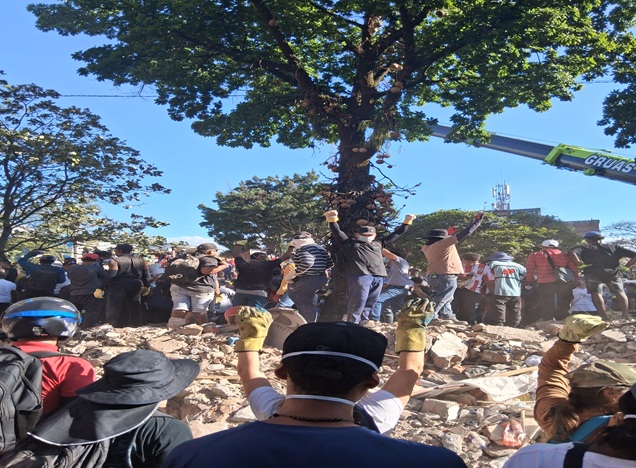
Cali: The City That Rescued Itself
One month after the earthquake, Mayor of Cali confirmed 150 people dead, more than 1,500 injured, and a staggering 45,139 families registered as disaster victims . The city’s Unified Command Post (PMU) reported 769 buildings classified as uninhabitable, with 475 more under restricted use . Over 52,000 families were evaluated for emergency aid .
20,000 families remain displaced from their homes, many in temporary shelters or staying with relatives. The María Mercedes Lloreda building in Cuarto de Legua was demolished. Reconstruction will take years. Mayor of Cali has described it as a “four-year marathon
But the numbers do not capture what happened in the first 48 hours.
When the earth stopped shaking, the formal rescue apparatus — the military, the civil defense, the international search-and-rescue teams — needed time to mobilize. In those crucial hours, before the heavy machinery arrived, the first people digging through the rubble of southern Cali were not state officials.
They were the Primera Línea.
Who Is the Primera Línea?
For readers overseas who have never heard of them, the Primera Línea — “the First Line” — is a name that carries immense weight in Colombia. They emerged during the 2021 national strike, a massive wave of protests against inequality, police brutality, and a proposed tax reform that would have hit the working poor hardest. The Primera Línea was made up of young people — students, workers, residents of Cali’s poor and working-class neighborhoods like Siloé and Aguablanca. They stood on the front lines of the protests, often with makeshift shields, facing tear gas and live ammunition.
In the aftermath, they were criminalized and stigmatized by the political and economic establishment. They were called violent, vandals, terrorists. Their faces were plastered on posters. Many were arrested, some killed. The city’s elites, who lived behind the walls of the exclusive barrios in the south, viewed them as a threat to order.
Then, in 2022, those same young people helped power Gustavo Petro to the presidency, voting in massive numbers for the first left-wing government in Colombia’s modern history. Cali became a symbol of that political shift — a city where the poor and the young had decided that their votes could change the national story.
On August 10, 2026, the earth shook the city again. And the Primera Línea came back out.
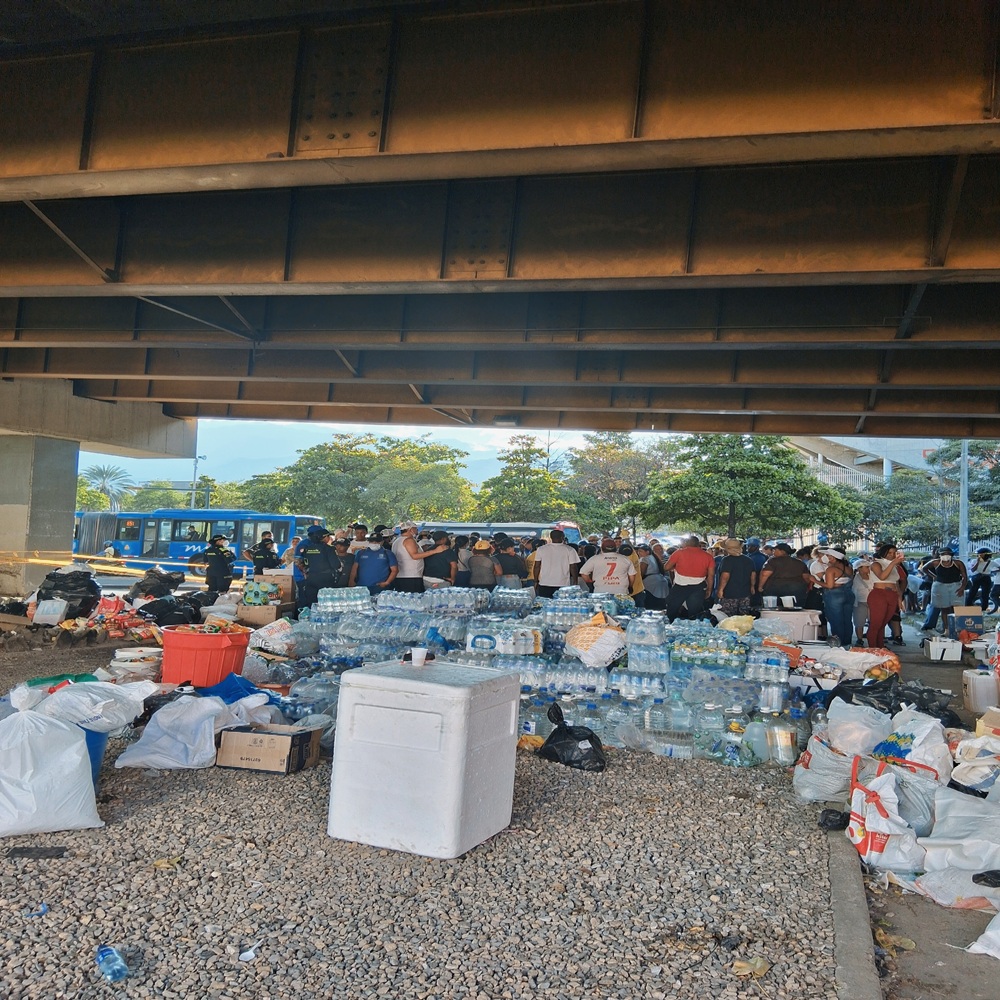
The Rescuers the State Forgot
A report from El País (Spain) in late August documented what happened in the days after the earthquake . In front of the collapsed Ana Paula building in the working-class neighborhood of Cuarto de Legua, a city official estimated that at least half of the volunteers digging through the debris were people who had been part of the Primera Línea .
They went to the wealthier neighborhoods. They went to the buildings that had crumbled in the south of the city — the same south that had looked at them with suspicion just a few years earlier. They did not wait for the government. They did not ask for permission. They put their hands in the rubble and pulled people out.
This is not a small detail. It is the moral center of the earthquake story in Cali.
The young people who had been treated as criminals by the city’s elite were now saving the lives of that same elite. The poor neighborhoods that the state had historically neglected were the first responders for the entire city. The Primera Línea, once a symbol of protest, became a symbol of solidarity without condition.
The Monument They Promised to Destroy
But there is another part of this story that cannot be ignored.
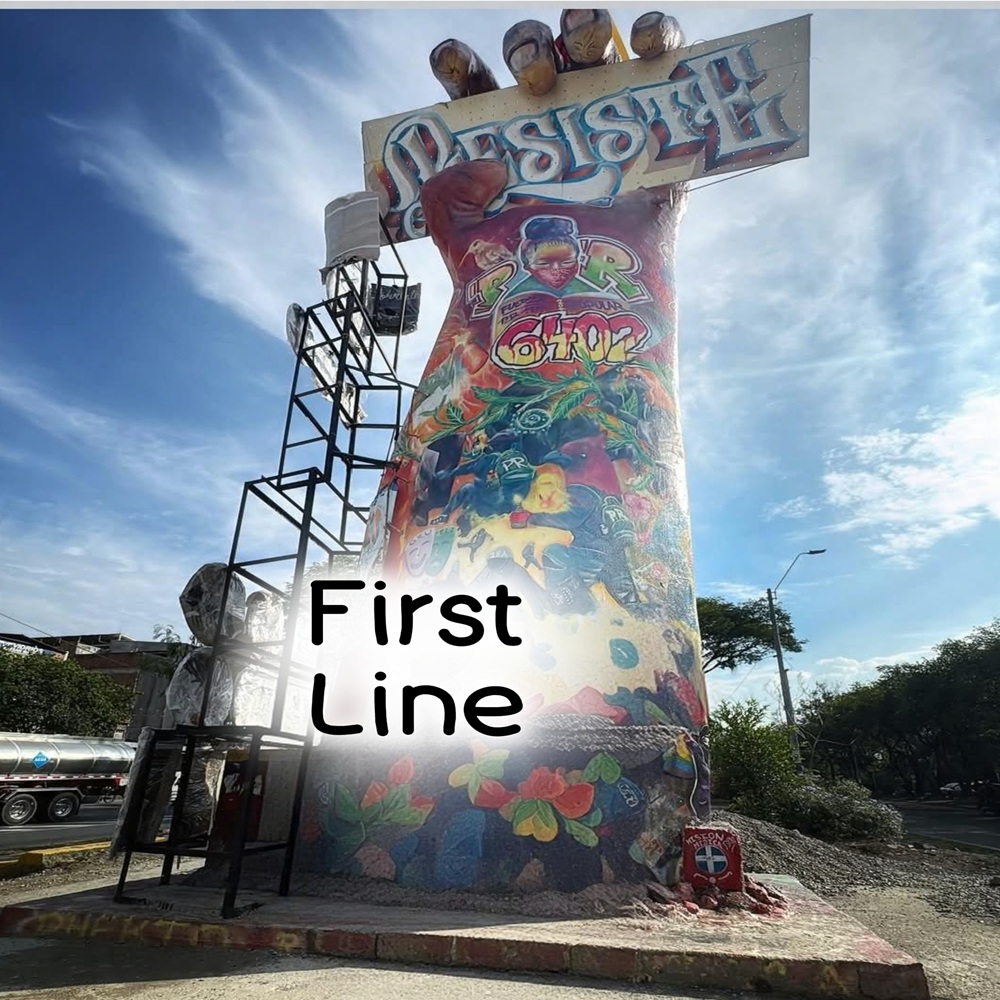
The Primera Línea built a monument. It stands in the Puerto Resistencia sector of eastern Cali — a 9.5-meter sculpture of a raised left forearm, constructed in 16 days by nearly 200 people using recycled materials and community donations. It was inaugurated on June 13, 2021, and adorned with the names and faces of victims of the protests .
To the communities of eastern Cali, it is a symbol of memory, dignity, and resistance.
To the incoming administration, it is something else.
The new administration in Colombia made the monument’s destruction a campaign promise. Declaring: “On August 7, to tear down that piece of junk those punks from the First Line made” . Calling it “an ode to terrorism and vandalism” .
In July 2026, social collectives marched to Cali’s Municipal Administrative Center demanding the monument be protected as national cultural heritage. They warned that the bureaucratic process had been stalled for over seven months — a delay they believe was intentional, to allow the incoming new administration to fulfill that promise .
“We don’t even want to think about the new administration in Colombia tearing down the monument,” one leader said. “There are many of us, and we will defend it — first peacefully, and through social mobilization” .
The Procuraduría (Inspector General’s Office) also weighed in, supporting a legal challenge that argues the monument’s construction license was granted after it was built — making it, in the eyes of the complainant, illegal
A City That Knew How to Respond
Cali’s response was good because the people already had experience. The city had endured the 2021 protests, the pandemic, and years of social tension. Its people knew how to organize. Community kitchens, neighborhood networks, and youth collectives that had formed during the strike became the backbone of the rescue effort.
The city’s PMU reported that by the end of the first day, 88 people had been rescued alive from the rubble . Over the following weeks, that number grew, but those first rescues — the ones done by hand, by neighbors, by the Primera Línea — saved lives that the official count might never have reached.
The Damage That Remains
One month later, Cali is still a city in recovery. 20,000 families remain outside their homes, many in temporary shelters or with relatives . The María Mercedes Lloreda building in Cuarto de Legua has been demolished . The reconstruction will take years. Mayor of Cali has described it as a “four-year marathon” .
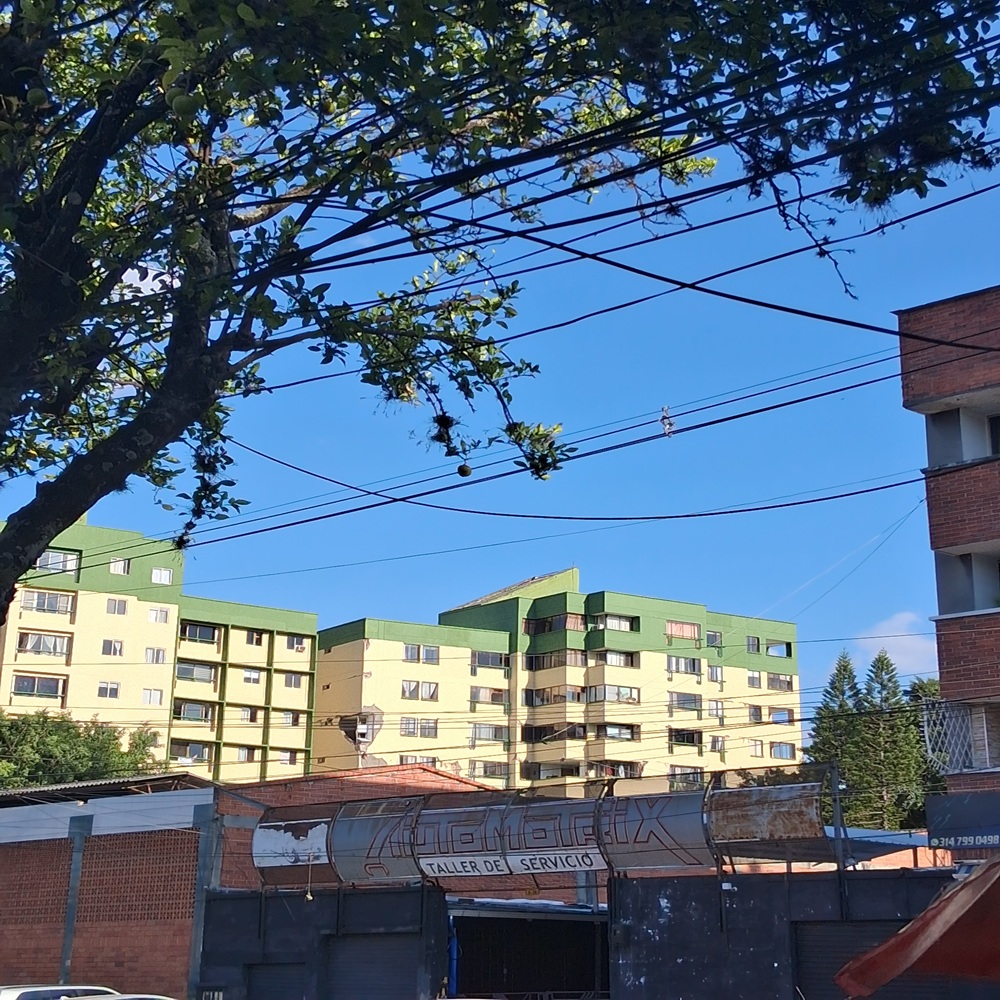
But the story of the Primera Línea is a reminder that even in the worst moments, the people of Cali did not wait to be saved. They saved each other. “People save people”
Frequently Asked Questions
What was the death toll of the 2026 Colombia earthquake one month later?
One month after the August 10, 2026, magnitude 7.4 earthquake, Colombian authorities reported 331 dead, 4,505 injured, and 111 people still missing across the affected departments.
Who is the Primera Línea (First Line) and why are they important in the earthquake response?
The Primera Línea (First Line) is a group of young people from Cali’s poor and working-class neighborhoods who emerged during the 2021 national strike. After the August 2026 earthquake, they were among the first to dig through the rubble and rescue survivors, before the formal state rescue apparatus arrived.
Which areas of Colombia were most affected by the earthquake?
The departments of Chocó, Valle del Cauca (especially Cali and Buenaventura), and the Coffee Zone (Risaralda, Caldas, Quindío) were the hardest hit. The epicenter was in San José del Palmar, Chocó.
Was the earthquake related to the Volcán Puracé?
No. The Servicio Geológico Colombiano has explicitly stated that the earthquake in San José del Palmar, Chocó, is NOT related to the activity of Volcán Puracé, which is on Orange Alert.