July 20, 1810 – July 20, 2026: The Fight Continues
*Many people believe Colombia became independent on July 20, 1810.The truth is more complicated. And more painful. And more relevant today than most of us want to admit. July 20 was only the beginning.
The First Step Was Not the Victory
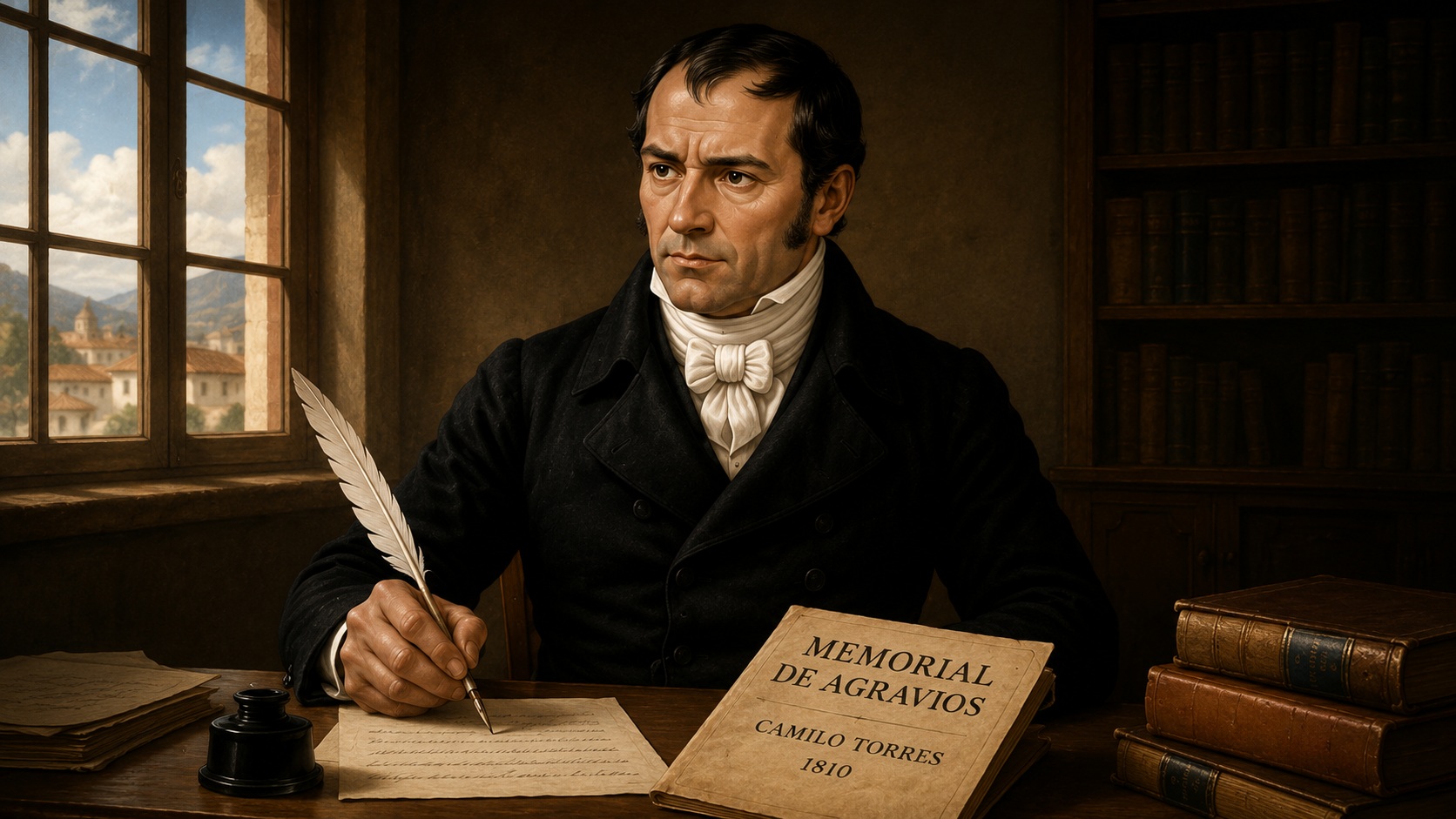
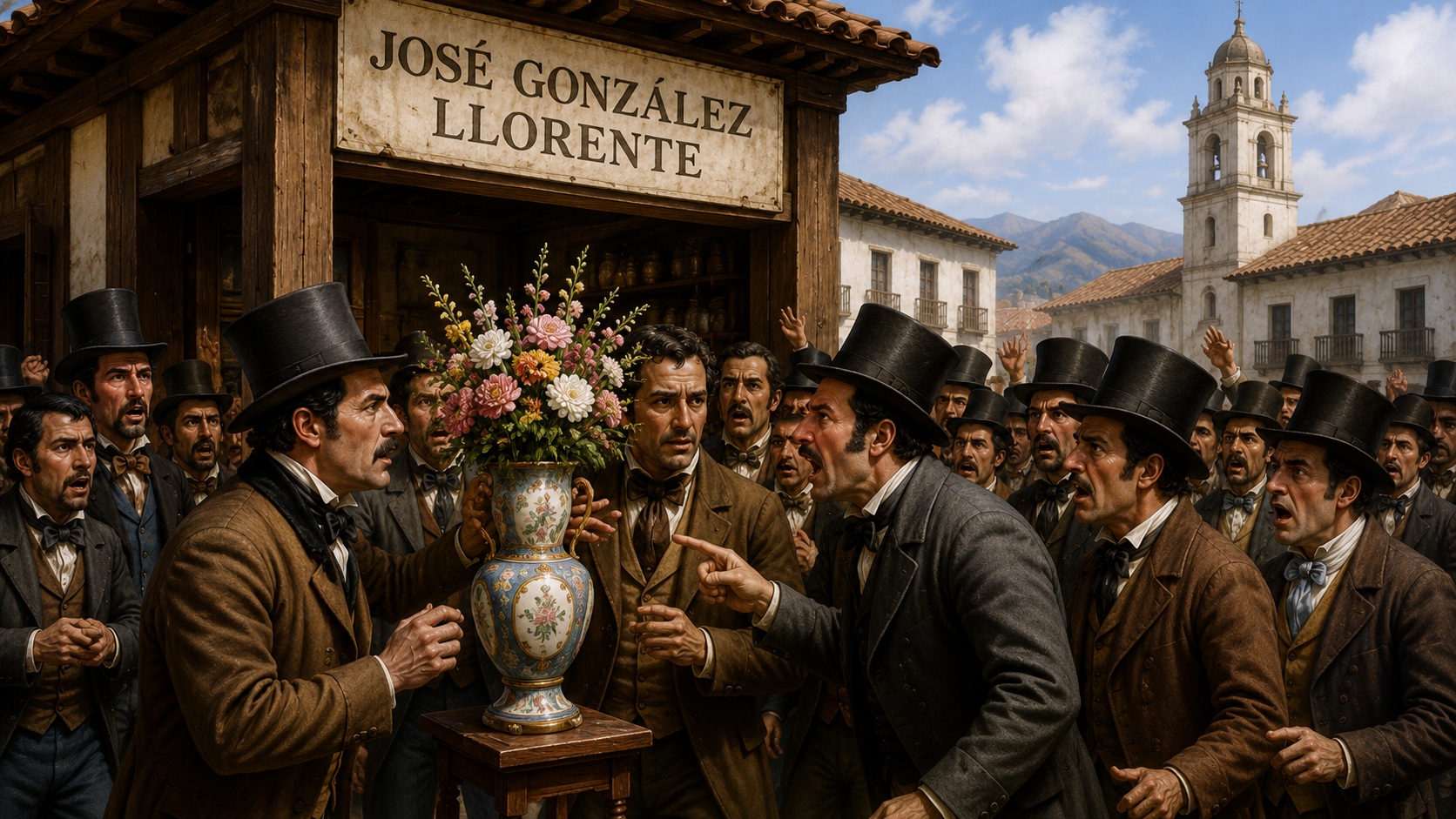
On that day in 1810, in Santa Fe de Bogotá, a borrowed flowerpot became the spark. But the men gathered inside the government building — leaders like Camilo Torres and Antonio Villavicencio — were not yet declaring full independence. They wanted political reform. Greater self-government. A voice. Outside, in the streets, José María Carbonell understood something they did not. Without ordinary people — artisans, workers, the dismissed and the disregarded — no revolution could survive. While politicians debated inside, Carbonell was rallying citizens to take part in history.Together, they established a governing junta and signed what became the first Independence Act. But that signature did not make Colombia free. Many provinces still recognized the authority of the Spanish king. Others demanded complete separation immediately. The country found itself caught between two futures. Over the following months, province after province declared independence on its own terms. The United Provinces of New Granada was born — an ambitious idea, fragile from the start. Everyone wanted independence. No one agreed on what the new nation should look like.
The Division That Almost Killed the Dream
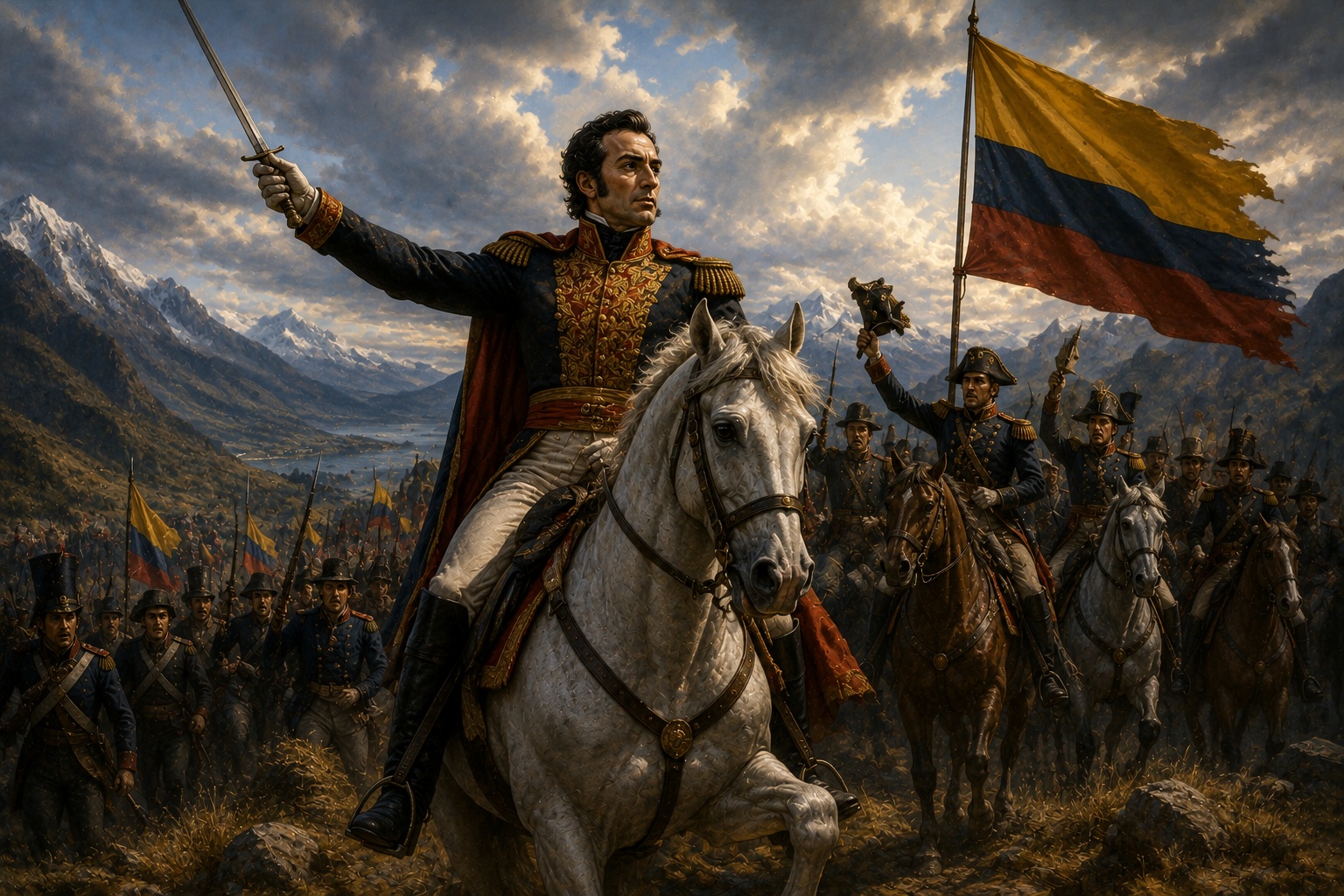
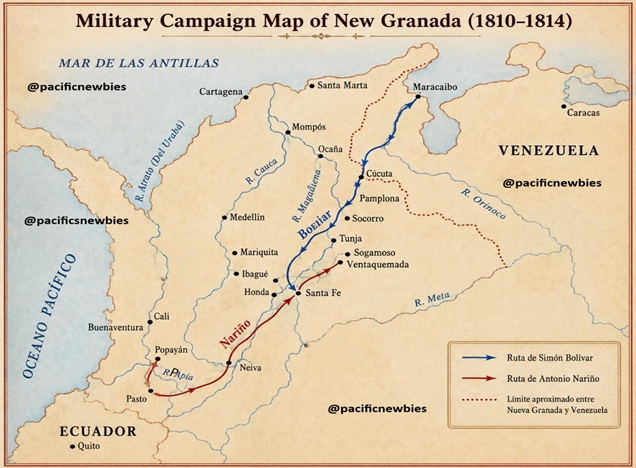
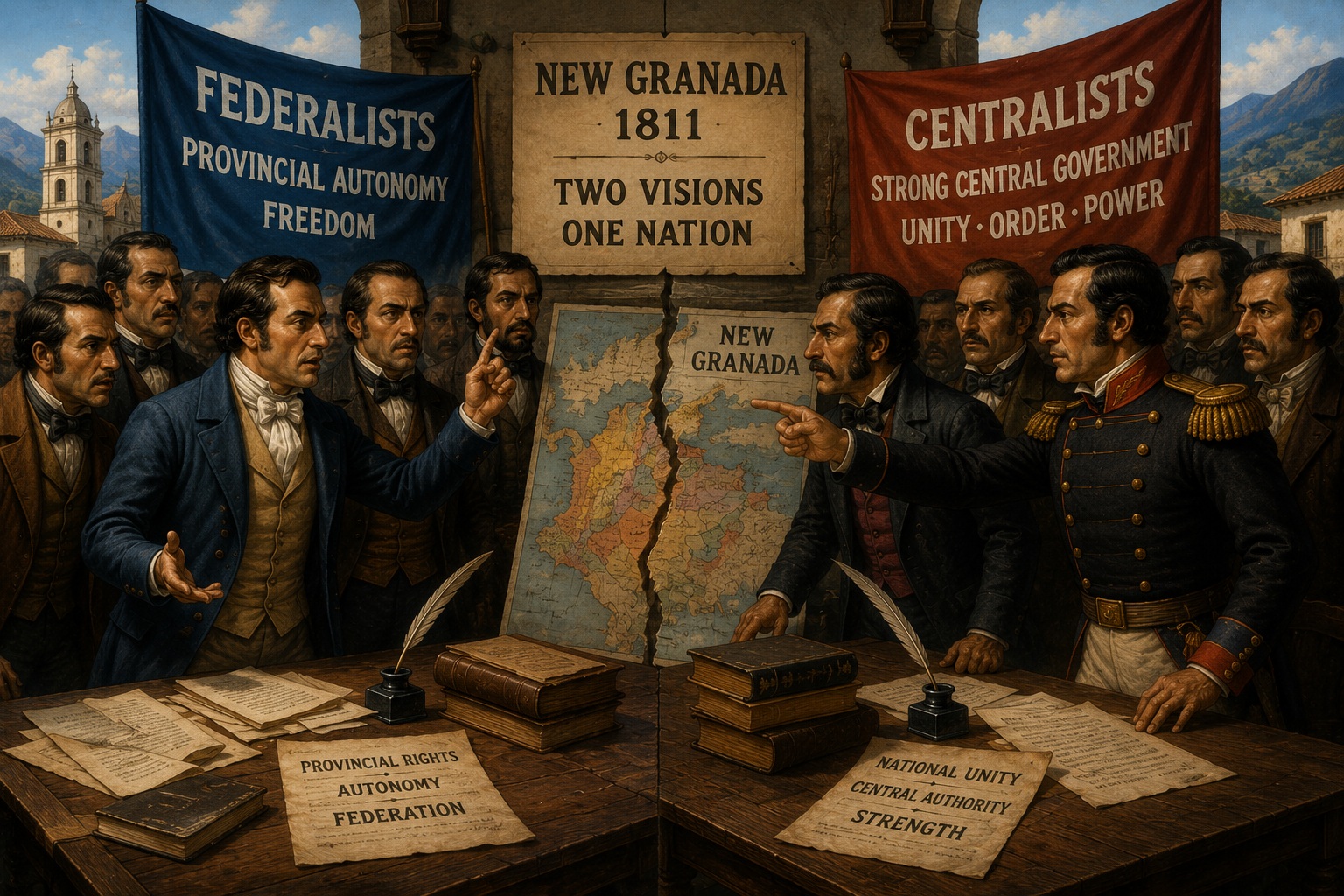
Some believed each province should govern itself with significant autonomy. Others argued that only a strong central government could hold the nation together. These were not abstract debates. They became armed conflict. Instead of standing together against Spain, patriots fought one another in a civil war. Historians later called this period the “Patria Boba” — the Foolish Fatherland. The internal divisions weakened the young republic at exactly the wrong moment. Spain saw the opportunity. General Pablo Morillo arrived with his forces and launched a brutal reconquest. The dream of independence suddenly seemed lost. It was during this darkest period that Simón Bolívar emerged. His vision extended beyond winning battles. He understood a truth that had escaped his fellow patriots: the provinces had to unite, or independence would die.Political disagreements continued to slow progress. But Bolívar’s military campaigns — Boyacá, Carabobo, Ayacucho — became decisive. The liberation that began on July 20, 1810, was only secured on August 7, 1819, and in the years that followed. Nine years. Not one day.
The Pattern That Repeats
Writing this on July 20, 2026. Exactly 216 years after that first step. And this cannot escape the feeling that we are living inside the same story.In June, Colombians voted in a presidential runoff. The margin was barely 250,000 votes (Difference in the national popular vote between De La Espriella and Cepeda Runoff June 21). Iván Cepeda, the leftist senator and chosen successor of Gustavo Petro, lost to Abelardo de la Espriella, a far-right lawyer who had received the “complete and total endorsement” of a foreign country.
The Carnegie Endowment for International Peace — not a left-wing blog, not a campaign account, but one of Washington’s most respected think tanks — published an analysis days ago calling the current administration in Washington a “kingmaker” in Latin America. The article described how his administration has tilted elections in Argentina, Honduras, and now Colombia toward preferred candidates. It called these “extraordinary interventions” and noted that sitting U.S. presidents do not typically endorse candidates in foreign elections “for such overtly partisan interests.”
And yet they did. And it worked.
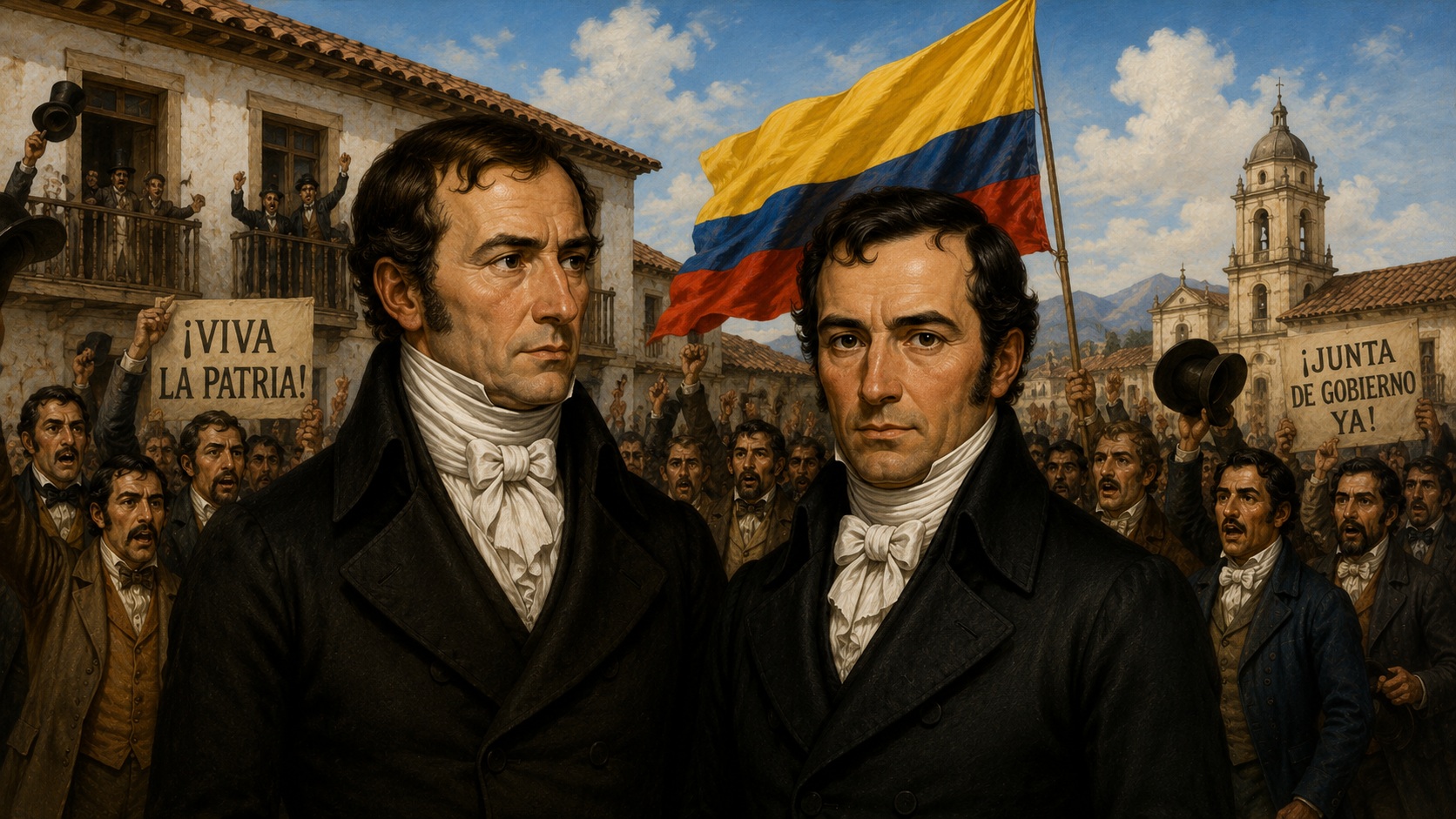
The New Reconquest
We do not call it a reconquest anymore. The language is softer now. “Endorsements.” “Trade relationships.” “Counter-narcotics cooperation.” But the effect is the same: a foreign power deciding who governs us. The divisions that weakened us in 1810 are still here. A coastal, progressive Colombia that voted for Cepeda. An Andean, conservative Colombia that voted for Abelardo. Two countries inside one. The territorial vote split 51% to 49%. The difference was 177,000 votes in the departments each candidate won (difference in territorial winner votes Cepeda’s 18 departments vs Abelardo’s 16 departments, First Round May 31). A rounding error. And into that crack stepped a foreign kingmaker.
This is not a metaphor. This is the Carnegie Endowment’s word , not pacificsnewbies. The same pattern played out in Argentina, where a bailout was conditioned on electoral outcomes. In Honduras, where Social network posts tipped a razor-thin race. In Colombia, where an endorsement — a single post — may have moved the 250,000 votes that decided everything.
Carbonell’s Lesson
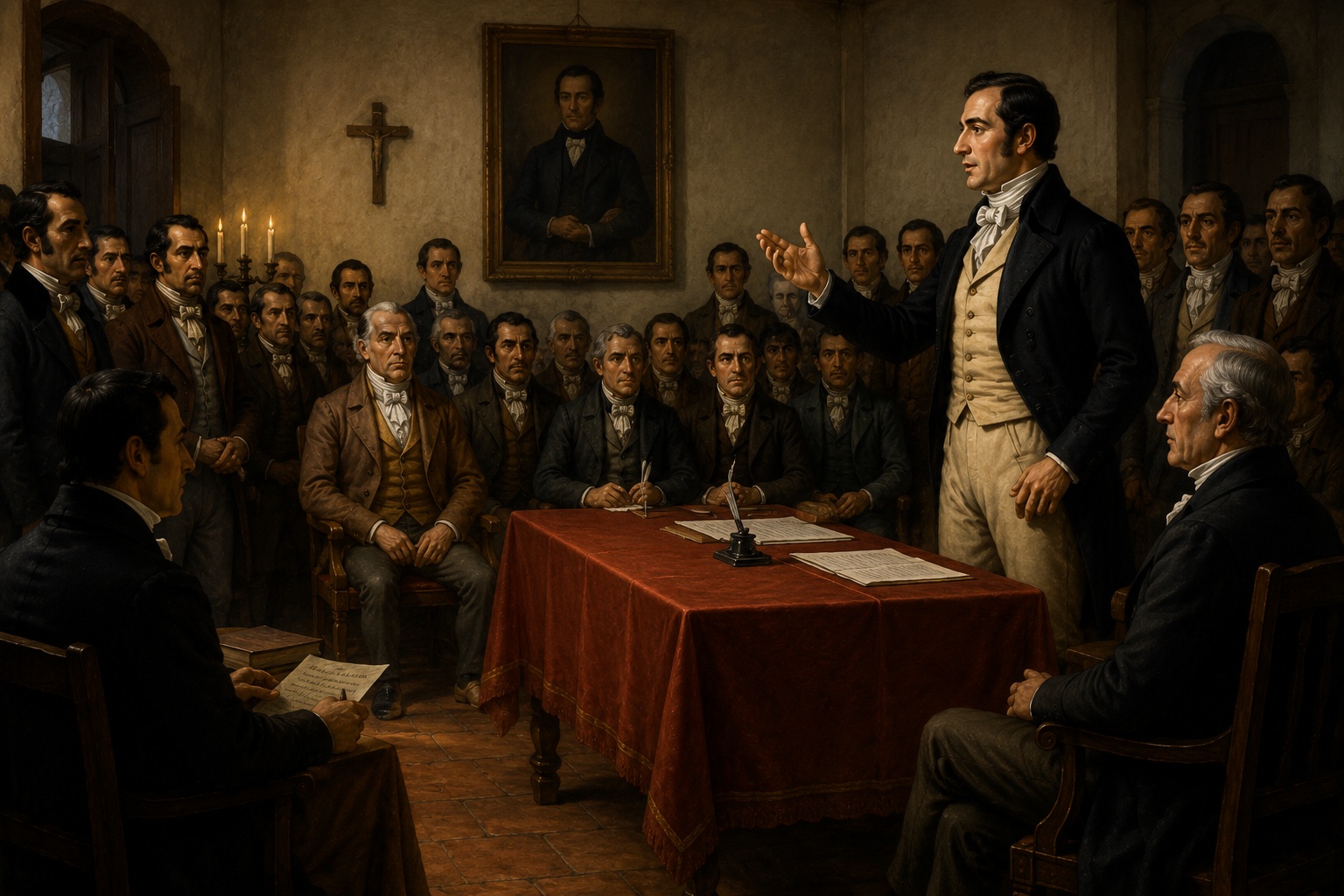
José María Carbonell understood in 1810 that without ordinary people in the streets, no government building would hold. The politicians debated. He organized. The politicians signed documents. He brought the crowd whose presence made those documents matter.
Today, we have new versions of those politicians. And we have new versions of those crowds — digital juries who flagged irregularities in the electoral system. International observers who confirmed concerns. Citizens who documented, posted, organized, and refused to look away.
But unlike 1810, the crowds were not enough. Or perhaps the institutions that were supposed to protect the vote had already been hollowed out. When the Consejo Nacional Electoral is seen not as a referee but as a participant, the game is not fair. When a foreign president can anoint a candidate and watch him win by a sliver, sovereignty becomes performance.
What Bolívar Knew
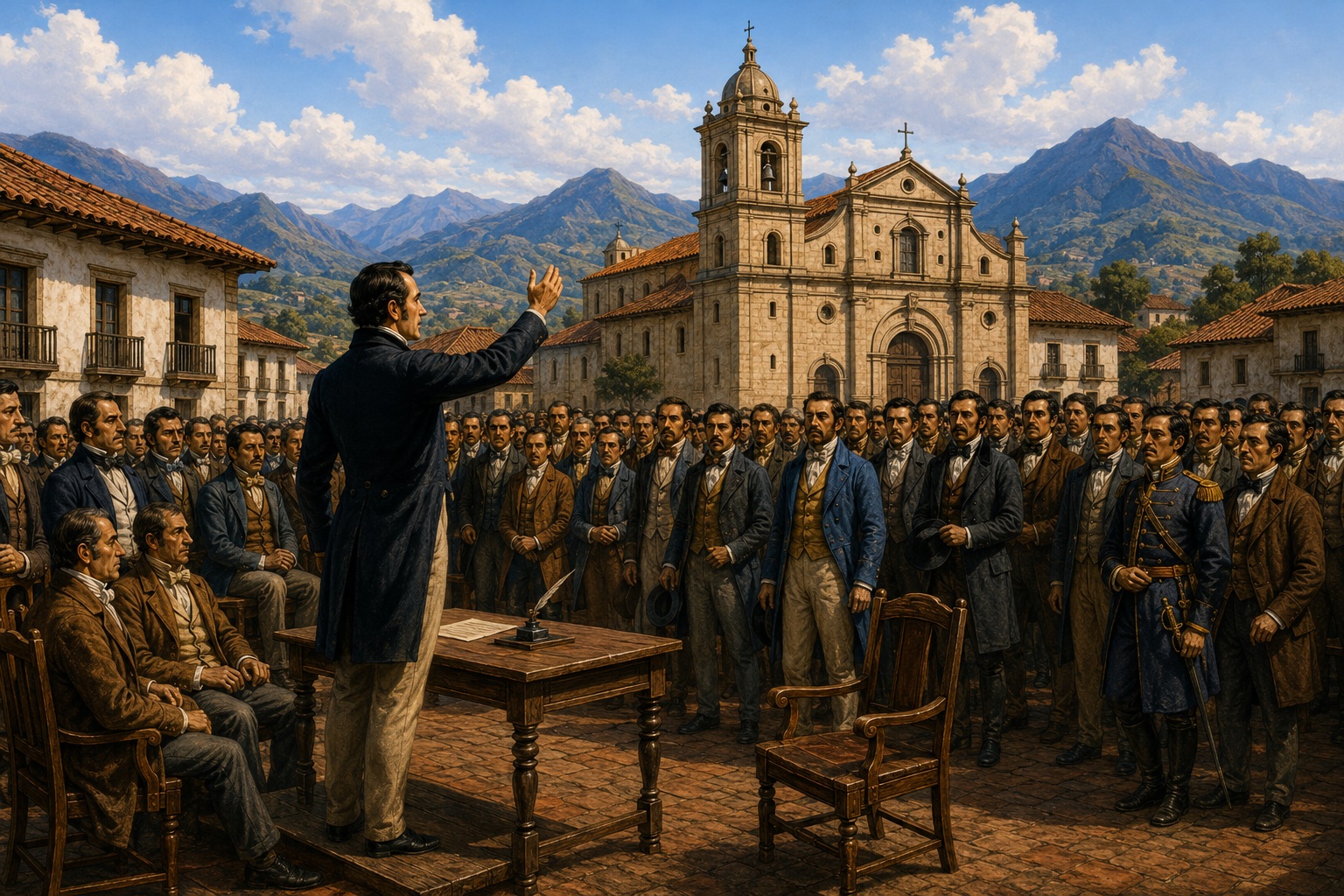
Bolívar’s greatest insight was not military. It was political. He understood that a divided house cannot stand against an empire. The “Patria Boba” was not a joke. It was a warning. And we are living inside its echo.
The Carnegie article ends with a chilling observation: the leaders Washington administration installs “perform loyalty rather than align strategically.” Even Milei, the star pupil , deepens Argentina’s ties with China . The loyalty is a gesture. The power is hollow. And when it “works,” the article says, “it teaches the region that U.S. power is no longer something to rely on.”
We are not being conquered by a stronger empire. We are being collected by a transactional one. The kings are temporary. The damage is lasting.
July 20, 2026
Colombia’s independence was not won on July 20, 1810. It was begun. It took nine years of war, sacrifice, and painful unity to secure it. And even then, the unity did not last. Gran Colombia dissolved. The divisions returned. The work continued.
Today, 216 years later, the work continues still.
We are living inside a new kind of colonial pressure — not with armies and viceroys, but with endorsements and bailouts, tariffs and Social networks posts. The tools have changed. The objective has not: to decide who governs us, and in whose interests.
July 20 is not a celebration of a finished victory. It is a reminder that freedom is not a single act. It is a long, difficult, and ongoing struggle — against external powers, yes, but also against the internal divisions that let them in.
The road after July 20 was harder than most people realize.
The road after July 20, 2026, will be too.
But we are still here. We are still fighting. And that, more than any single date, is what it means to be Colombian.